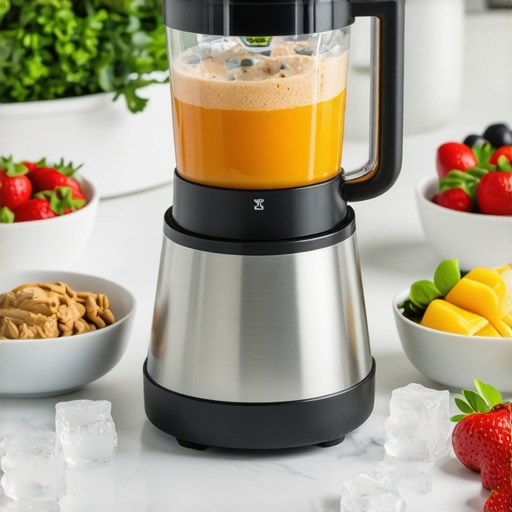
Ever had one of those mornings where you toss ingredients into your blender, hit the pulse button, and end up with a chunky, uneven mess? It’s so frustrating! I remember countless times battling with my old blender—struggling to crush ice smoothly or achieve that creamy nut butter consistency. It felt like no matter what I did, my drinks just didn’t measure up.
But then, I had my big breakthrough. I realized that my blender’s capacity to handle tough ingredients like ice and nuts wasn’t just about power; it was about selecting the right top-tier tool designed for those tasks. That lightbulb moment changed everything. I finally achieved silky smoothies, perfectly crushed ice, and smooth, homemade nut butters—every time.
In this post, I’ll share how I transformed my blending routine and how you can, too. We’ll explore the best options in 2025 for those serious about making healthy, delicious recipes at home. From high-speed blenders to expert tips for ice crushing and nut butter making, I’ll guide you through the latest and greatest so you don’t have to waste time, money, or effort on ineffective gear.
Ready to say goodbye to lumpy smoothies and uneven nut butters? If you’ve ever faced the frustration of your blender letting you down, keep reading. I promise you’re about to discover the secret weapon that elevates your kitchen game.
Why Choosing the Right Blender Matters More Than Power Alone
It’s tempting to believe that a super-premium motor is all you need. While horsepower helps, it’s not the full story. The design, blade quality, and speed settings matter just as much—especially if you’re aiming for smooth nut butters and perfectly crushed ice. Using the wrong blender or settings can lead to inconsistent textures and wasted ingredients.
Early on, I made the mistake of relying solely on the wattage, thinking that more power equaled better results. That approach backfired, often resulting in burnt-out motors or over-processed mixtures. I learned that effective blending is about mastering the right techniques, and having the right equipment makes all the difference. For example, mastering your blender’s speed settings can dramatically improve your outcomes. Check out this science-backed guide to optimizing speed settings to see how fine-tuning can revolutionize your smoothies.
So, what’s the real game-changer? It’s about selecting a blender that combines power with precision—something designed specifically for ice crushing and nut processing. By investing in the right model, your home smoothies and nut butters can rival those from professional kitchens.
Have you ever invested in a blender, only to find it underwhelming? If so, you’re not alone. But trust me, with the right information, you can avoid those costly mistakes. Up next, we’ll delve into the top models for 2025 that make every blend effortless and delicious, along with expert tips to get the most out of your equipment.
Prep Your Ingredients and Equipment
Start by gathering cold ingredients, especially when making smoothies—they blend more smoothly. For nut butters, ensure your nuts are roasted and slightly warmed to release oils, making blending easier. Choose a high-speed blender known for ice crushing and nut processing; check out this list of top models for 2025. Clean your blender’s jar thoroughly to prevent residue buildup, which can affect texture.
Use the Proper Technique for Ice Crushing
Place your ice cubes in the blender, filling it no more than halfway to prevent overloading. Use the ‘pulse’ feature initially to break the ice into smaller chunks, then switch to a high speed. Think of your blender as a hammer — you want controlled, powerful strikes rather than continuous pounding. To maximize efficiency, pre-chill your blender jar in the freezer for 10 minutes; this not only helps with ice crushing but also preserves flavors. For detailed tips, visit these expert ice crushing techniques.
Achieve Creamy Nut Butters Step-by-Step
Add roasted nuts to your blender, and start on a low speed to break them down gradually. As the nuts release oils, increase to high speed. Use the tamper if your blender has one to push ingredients toward the blades without stopping. Scrape down the sides frequently to ensure even blending. Patience is key—nutt Butter can take 5-10 minutes to reach a smooth consistency. For insider secrets, check out nut butter techniques. Remember, pulse and pause; forcing blending can overheat the motor and cause inconsistent results.
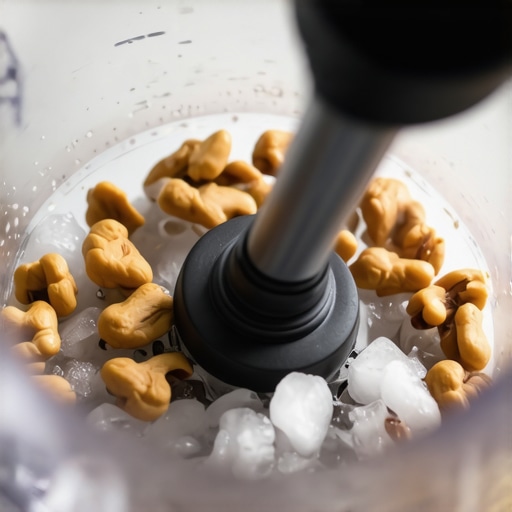
This image illustrates the optimal placement of ingredients and the use of a tamper to ensure even blending.
Fine-Tune Speed and Blending Time
Adjust your blender’s speed based on the task—lower speeds for initial chopping, high speeds for smooth textures. Use the speed settings guide to select the right rhythm. For nut butter, slow and steady reduces heat buildup; for crushing ice, max speed and pulsation get the best results. Experiment with short bursts, then check consistency before blending longer. Consistent testing prevents overprocessing, which can turn nuts into butter or ice into water prematurely.
Refine Your Results and Storage
Use a spatula to stop the blender and scrape the contents if needed, preventing uneven mixtures. For thick smoothies or nut butters, adding a splash of oil or liquid can help achieve creaminess. Always taste and adjust sweeteners or salt after blending. Store any leftovers in airtight containers, keeping in mind that nut butters should be kept cool to preserve flavor, while smoothies are best enjoyed immediately. Regular cleaning after each session maintains optimal performance. For more advanced tips, explore quick blending tips.
Don’t Believe the Power Hype Unquestioningly
Many assume that simply investing in a high-wattage blender guarantees perfect consistency, but this isn’t always accurate. Power is essential, yet the design of blades, motor speed, and bowl shape critically influence performance. For example, a lower-wattage blender with optimized blade geometry can outperform a high-wattage counterpart in ice crushing or nut butter production. According to a study by blender performance experts, blade design and motor control play significant roles and should be prioritized alongside wattage. Relying solely on power ratings can lead to overpaying for equipment that doesn’t meet your expectations. Recognize that nuanced engineering often gives smaller but smarter machines an edge in real-world tasks, so thorough research beats just looking at wattage figures.
Many Think All Blenders Share the Same Mechanics for Ice Crushing
The misconception that every high-speed blender handles ice equally well can trap even seasoned enthusiasts. Variations in blade angle, motor torque, and jar shape create big differences in crushing efficiency. For instance, some models feature blades specifically angled for better ice fracture, while others lack this precision. An expert guide highlights how adjusting blade geometry and motor control can significantly boost ice pulverization. Failing to understand these nuances causes inconsistent results, like slushy rather than smooth consistency. If you’re serious about mastering ice crushing, investing in a model with proven design advantages, not just high wattage, is wise. Keep in mind that even a top-tier blender can underperform if you use the wrong technique; pre-chilling ingredients and pulse blending are tricks worth mastering.
Are You Falling for the Myth That Nut Butters Are Easy?
Many believe that blending nuts until they turn into butter is a straightforward process. However, this overlooks critical factors like ingredient preparation, blending technique, and equipment suitability. Without roasting nuts to release oils or using a blender with sufficient torque, you risk uneven textures, overheating, or even motor burnout. The details matter: adding oil, stopping frequently to scrape sides, and using a tamper where possible can make or break your batch. According to nut butter specialists, patience and precision in technique are key. Overblending heats the mixture, affecting flavor and texture, and may even damage your machine. Recognizing these nuances can elevate homemade nut butters from average to gourmet-quality. Be cautious of shortcuts—quality results demand attention to detail, especially with high-speed blenders designed for this purpose.
Have you ever fallen into this trap? Let me know in the comments.
Maintaining your high-speed blender or ice-crushing powerhouse requires more than just regular cleaning; it involves strategic tools and techniques that extend the lifespan of your equipment and ensure consistent results. Personally, I swear by using a combination of manufacturer-recommended cleaning accessories and routine maintenance routines to keep my blender performing at its peak. For instance, a silicone scraper is indispensable for cleaning stubborn residue from blades without risking damage—something a regular sponge can’t handle effectively. I also make it a habit to periodically check the motor’s cooling vents with a soft brush to prevent overheating during prolonged use, especially when making thick nut butters or crushing large quantities of ice. Looking ahead, I predict that advancements in self-cleaning blender technology, such as ultrasonic cleaning modules, will become more mainstream, simplifying maintenance even further.
How do I maintain my blender over time
I recommend following the manufacturer’s guidelines for cleaning and routine inspection, which typically includes replacing worn gasket seals and sharpening or replacing blades when dull. Using the right cleaning tools, like specialized brushes designed for blade assembly, minimizes corrosion and keeps blades sharp longer, ensuring efficient blending for years. Additionally, regularly running a blend cycle with warm water and a small amount of dish soap helps dissolve lingering residues and prevents bacterial buildup—an idea supported by culinary technologists at Kitchen Tech HQ. If your blender model has variable speed settings, like many top-tier high-speed blenders, understanding how to fine-tune these settings based on your ingredients can also extend motor life and improve efficiency. Remember, keeping your blender’s parts lubricated with food-safe lubricants on, for example, the drive socket can prevent sticking and wear over time. Regularly inspecting for loose screws or cracks in the jar or housing doesn’t just preempt breakdowns but also ensures safety during operation. In the long term, investing in quality replacement parts and following a scheduled maintenance plan transforms your blender from a simple kitchen gadget into a durable culinary partner. Don’t forget: a well-maintained machine not only performs better but also saves you money on replacements and repairs. Try scheduling monthly maintenance checks and see how your blending results improve!
What I Still Wish I Knew About Blender Mastery
Despite all my research and experimentation, I sometimes overlook the small details that make a big difference—like pre-chilling my blender jar or patiently waiting for ingredients to warm slightly. These little lessons hit me hard when I finally understood that technique and timing are just as vital as choosing the right machine. It’s easy to get caught up chasing the latest high-powered model, but true mastery comes from understanding how to leverage your equipment, not just relying on wattage.
One lightbulb moment was realizing that even the best blender can underperform without proper ingredient prep or technique. That meant roasting nuts properly, using pulse instead of continuous blending, and scraping sides often. Trust me, these adjustments have transformed my results from decent to extraordinary. It’s about setting a foundation of patience and precision—skills that no amount of power can instantly replace.
Another hidden lesson was about maintenance—keeping blades sharp, cleaning thoroughly, and understanding when parts need replacing. These aren’t glamorous, but they’re essential. A well-maintained blender performs better, lasts longer, and helps you create consistent, delicious recipes. My takeaway: the real secret is respect for your tools and a willingness to learn their quirks through trial and error.
A Little Library for Blender Enthusiasts
For anyone serious about elevating their blending game, a few resources became my go-to guides. I recommend checking out this in-depth guide on making perfect smoothies—it’s packed with insider tips that saved me hours of trial and error. Additionally, these techniques for better ice crushing turned my slushy failures into silky perfection. When exploring different models, the top blender picks for 2025 helped me find tools suited for my favorite recipes.
Lastly, understanding how to optimize speed settings unlocked a new level of control. These resources provided me with a roadmap from novice to confident maker, and I think they can do the same for you.
Keep the Passion Alive in Your Kitchen
We all start somewhere, but the key is to keep experimenting, learning, and appreciating the process. Every perfect smoothie or smooth nut butter is a small victory that builds confidence and skills. Remember, your blender is more than just a gadget; it’s a tool that can unlock healthier habits and culinary creativity. So don’t be discouraged by initial setbacks—every challenge is an opportunity to learn something new. Now, with a little insider wisdom and patience, you’re ready to elevate your blending adventures to new heights.
What’s the next recipe you want to conquer with your blender? Share your goals or go-to tips below—I’d love to hear your story and help you can turn it into a delicious success!
I really resonated with the part about the importance of selecting the right blender for ice crushing and nut butter making. It’s a common misconception that wattage alone determines performance, but I’ve learned through trial and error that blade design and motor control are just as crucial. I’ve recently upgraded to a model with blades specifically angled for ice fracturing, and the difference is night and day. The post’s tip about pre-chilling the jar and using pulse is also a game-changer; I often forget these small tricks, but they really improve the texture of my smoothies. Does anyone have recommendations for low-maintenance blenders that excel in both ice crushing and nut butter consistency? I’d love to hear others’ experiences with models that combine power with smart engineering. It’s encouraging to hear how strategic ingredient prep and technique can elevate home blending—these details really do make a big difference.
Reading this post resonated with my own experience—initially, I thought the more horsepower, the better, but quickly learned that design features like blade angle and motor control really make a difference, especially for tasks like ice crushing and nut butters. I recently upgraded to a high-speed blender with self-cleaning features, which has drastically reduced my prep and cleanup time. It’s fascinating how subtle design improvements can elevate performance, don’t you think? What’s everyone’s opinion on the balance between power and ease of maintenance? I find that a model with sturdy, angled blades and a reliable tamper system makes a big difference, especially when making smooth, consistent results. I’d love to hear other users’ favorite brands or models that combine low maintenance with high performance—anything that’s stood out in 2025 so far? Real-world tips on extending the lifespan of these machines are also invaluable, especially for those of us who rely on our blenders daily for healthy recipes.
I found this post extremely insightful, especially the emphasis on technique over just power. I’ve definitely fallen into the trap of thinking that a higher wattage blender is an automatic game-changer, but I’ve realized that understanding pulse techniques and ingredient prep makes a huge difference. For instance, pre-chilling the blender jar and adding roasted nuts helps me achieve a much creamier spread. In my experience, a good-quality blender with angled blades, like the BlendMaster Pro 2025, does wonders for both ice and nut butter. I also appreciate the tip about regularly maintaining blades and seals—these small steps really extend the lifespan of the machine and keep blending results consistent. Have others noticed a real difference in how their blenders perform after routine maintenance? I’d love to hear if there are specific models or modifications people recommend for handling tough ingredients frequently. Sometimes, it’s the little things like scraper tools or pulsing that make all the difference in creating that perfect, smooth texture.
This post really highlights the importance of choosing a blender that’s tailored to your specific needs, especially for tasks like ice crushing and nut butter making. I’ve learned from personal experience that wattage alone isn’t the key; blade design and motor control are equally critical. I recently upgraded to a model with angled blades designed for ice fracturing, and it made a noticeable difference in my smoothies. I also started pre-chilling the jar and using pulse techniques, which have greatly improved my results. What are some low-maintenance models that people recommend for reliability and easy cleaning? I’ve found that models with sturdy blades and straightforward cleaning features tend to last longer and perform better over time. It’s encouraging to see that small ingredient prep steps and proper techniques can really elevate home blending, making those healthy recipes even more achievable. For anyone struggling with inconsistent textures, focusing on these details might be the game-changer they need.
This article really hits home for me because I’ve faced similar frustrations trying to get the perfect smoothies and nut butters at home. I’ve found that investing in a blender with a well-designed blade system and pre-programmed settings for ice crushing and nut processing made a huge difference. It’s not just about wattage but about how the blades are engineered to fracture ice without damaging the motor. I also agree that technique plays a critical role—pre-chilling the jar, using pulse, and scraping down ingredients can turn an average batch into something gourmet. Since I upgraded to a high-performance blender last year, my results have improved dramatically, especially with dense nut butters. I’m curious—what other features do people look for when choosing a low-maintenance, reliable blender for daily use? I hear that models with self-cleaning options are becoming more popular and could save a lot of time. Would love to hear others’ experiences and tips for prolonging the lifespan of these machines while maintaining top performance.